
ADHD affects our executive functions, the brain's management team for planning, focus, memory, motivation and emotions. Research suggests these can be around 30% impacted. Think of it as a post office that's 30% understaffed. If we're short-staffed, it makes sense to take really good care of the staff we do have.
The messenger most closely tied to ADHD is dopamine, along with its partner noradrenaline, which helps with alertness and attention. Then there's oxytocin, a hormone that eases stress and helps us feel we belong. This isn't an ADHD chemical as such, but when we feel calm and connected, everything else becomes easier.
The good news is that there's plenty we can do to look after all of them, whatever our age.
Dopamine: keep your bucket full
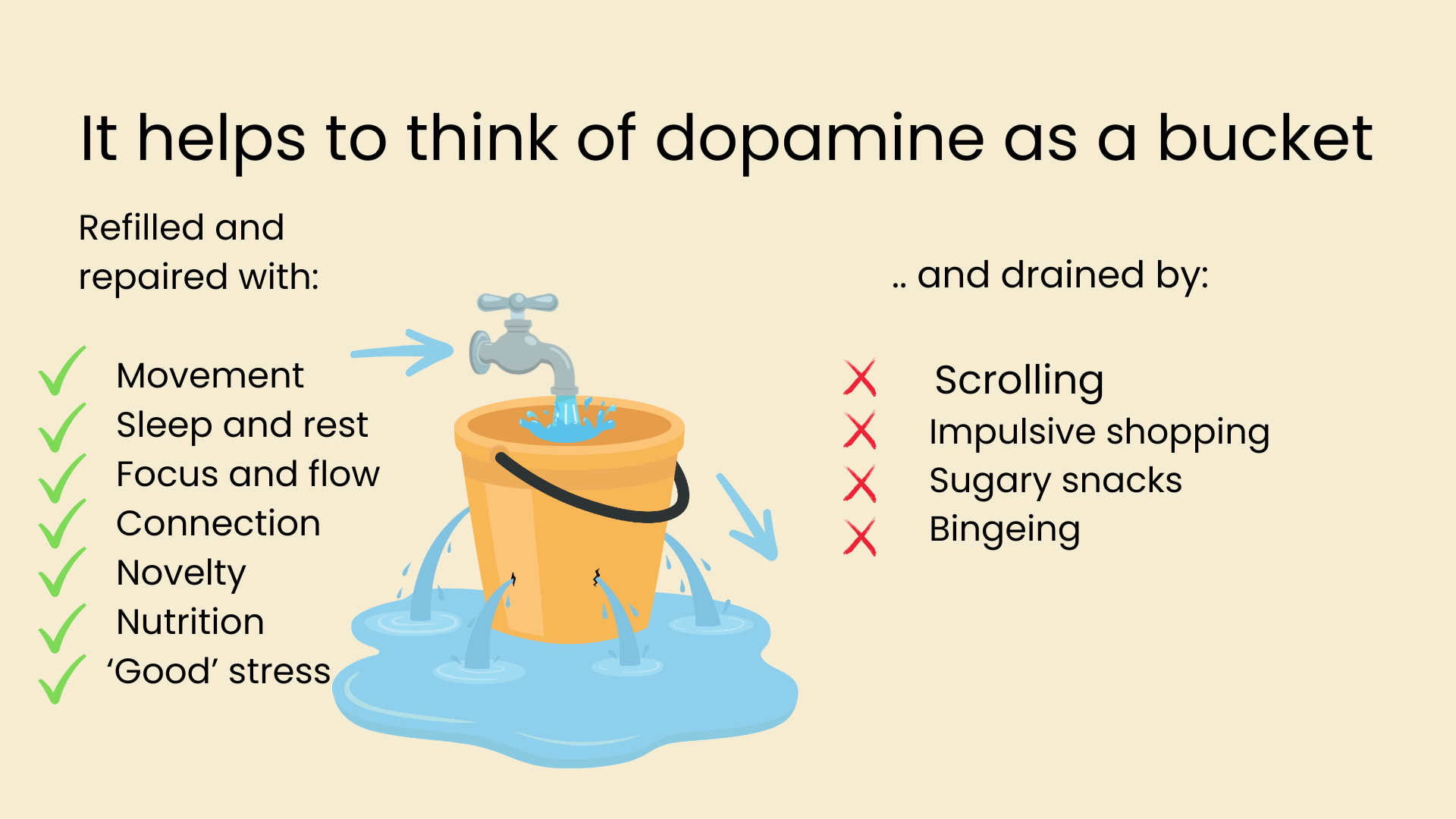
Many of us think of dopamine as the "feel-good hit" we get from a reward. In fact, the wave comes in the anticipation, before the reward arrives, and it's what gets us moving towards it. One of its main jobs is to keep us going through less interesting tasks, and to give us that deep sense of satisfaction once we've put in the effort.
Picture a bucket of motivation. When it's full, we feel able to get going and stick with things. Quick hits like scrolling on our phones, impulsive shopping, sugary snacks or bingeing give us a brief surge, but they drain the bucket and leave us feeling flatter than before.
What fills the bucket is a daily challenge: something small but a little bit effortful that we choose to do. For example:
tidying a drawer
a brisk walk or a cold shower
learning an instrument or a language, just bite-sized
taking on a regular role that stretches you
After retirement, much of the everyday effort that work used to demand simply disappears, so it's worth building challenges into our days to replenish our bucket.
Many of these challenges, especially movement and cold water, boost noradrenaline too, so you get two for one.
Oxytocin: care for your blanket
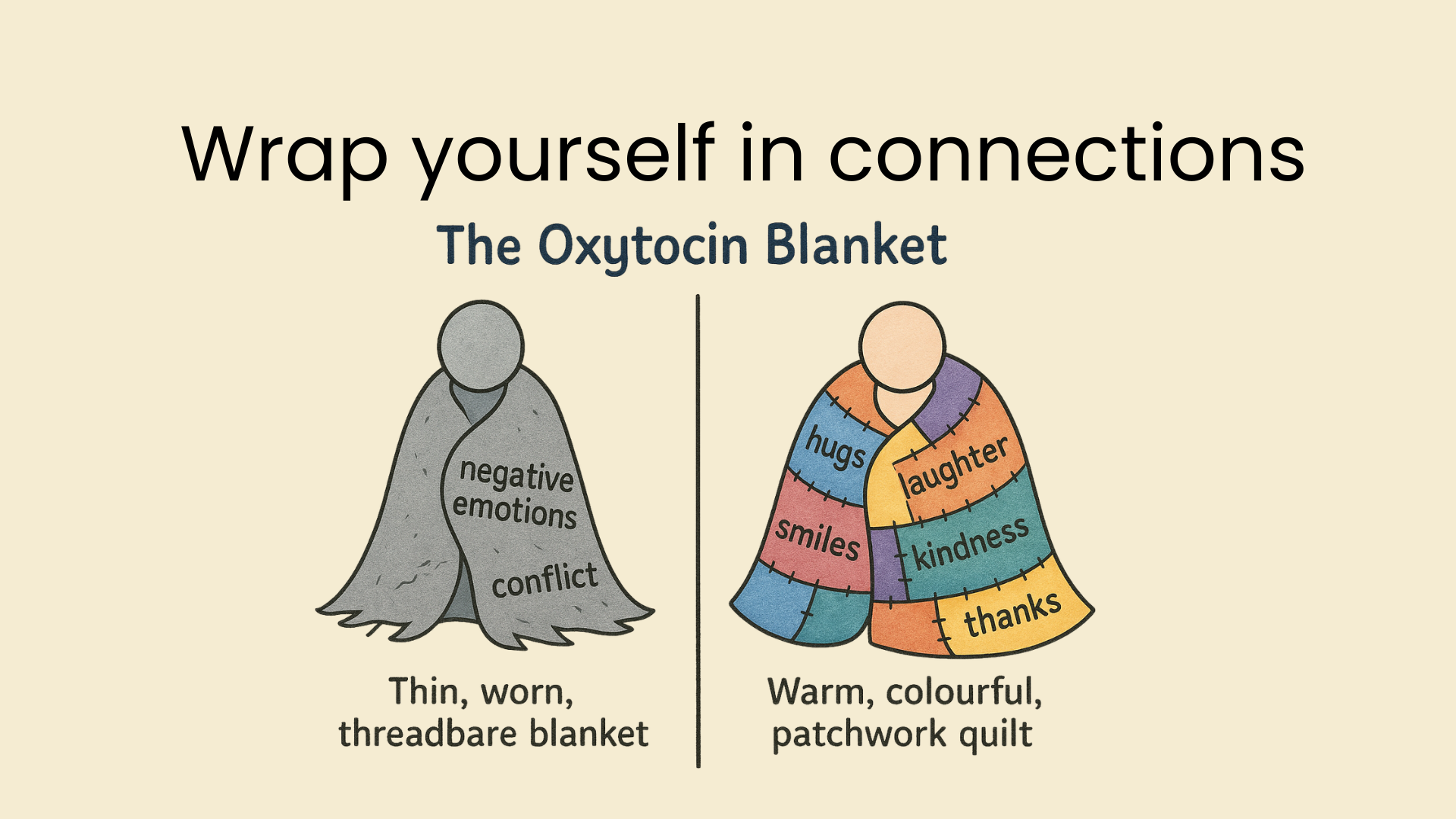
If dopamine keeps us going, oxytocin helps us feel safe. It's released when we feel warmly connected to others, and it helps to calm the body's stress response.
Think of it as a comfort blanket. Every hug, shared laugh, kind word or moment of gratitude adds a colourful patch, and that's true for the person on the receiving end as well as for us. Stroking a dog or cat counts too.
For many of us, the emotional ups and downs of ADHD can make us pull away from people. Isolation then breeds rumination, and rumination makes it even harder to reach out. Once the social structure of work has gone, the ready-made daily contact goes with it, so this circle can tighten without us noticing.
This blanket is worth looking after. Add patches when you can, and mend it as soon as you notice a tear. A few ideas:
a regular phone call or coffee with someone who gets you
joining (or starting!) a support group
doing something kind for someone else
body doubling, where we work alongside others, which many of us find calming as well as productive
Start with one small thing
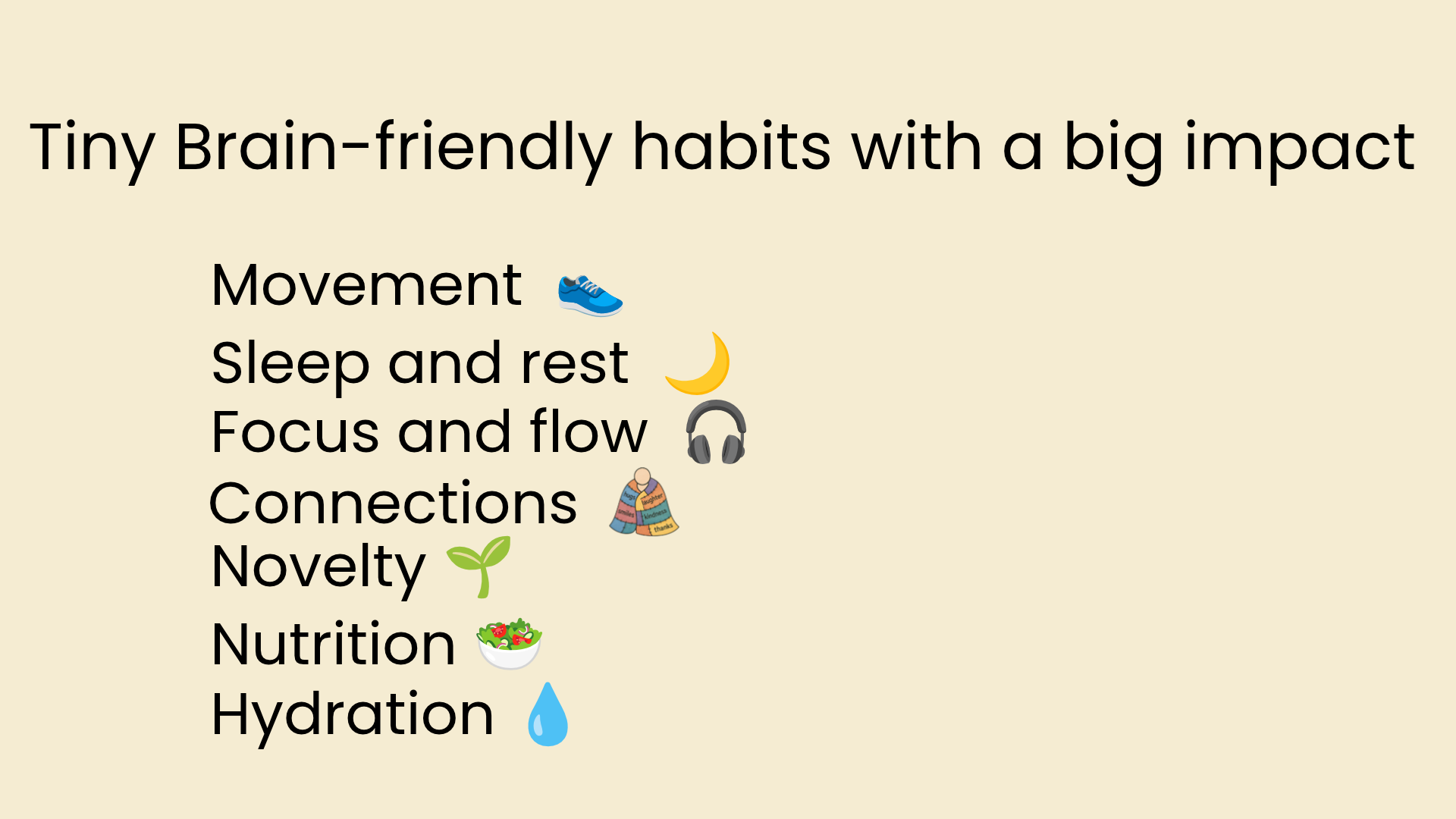
Looking after our brain's messengers works best when it becomes a habit. Every time we have to decide what, where, when and how, that decision costs us energy. A habit takes that decision away, and gets us past the inertia of starting.
So don't try to do everything at once. Choose just one idea from this blog, perhaps a daily walk, a cool finish to your shower or a weekly call with a friend, and make it part of your day.
Then track it where you'll see it. I keep a star chart in my eyeline, and I give myself a good hearty tick every time. It's a tiny reward, and it's surprisingly satisfying.
That one small habit could be the gentlest gift you've ever given your future self, and the one most likely to stick.
You might also enjoy: ADHD and Procrastination: A Kinder Way to Help Your Future Me
