
Go to Work on an Egg: Four Protein Hacks for Your ADHD Brain
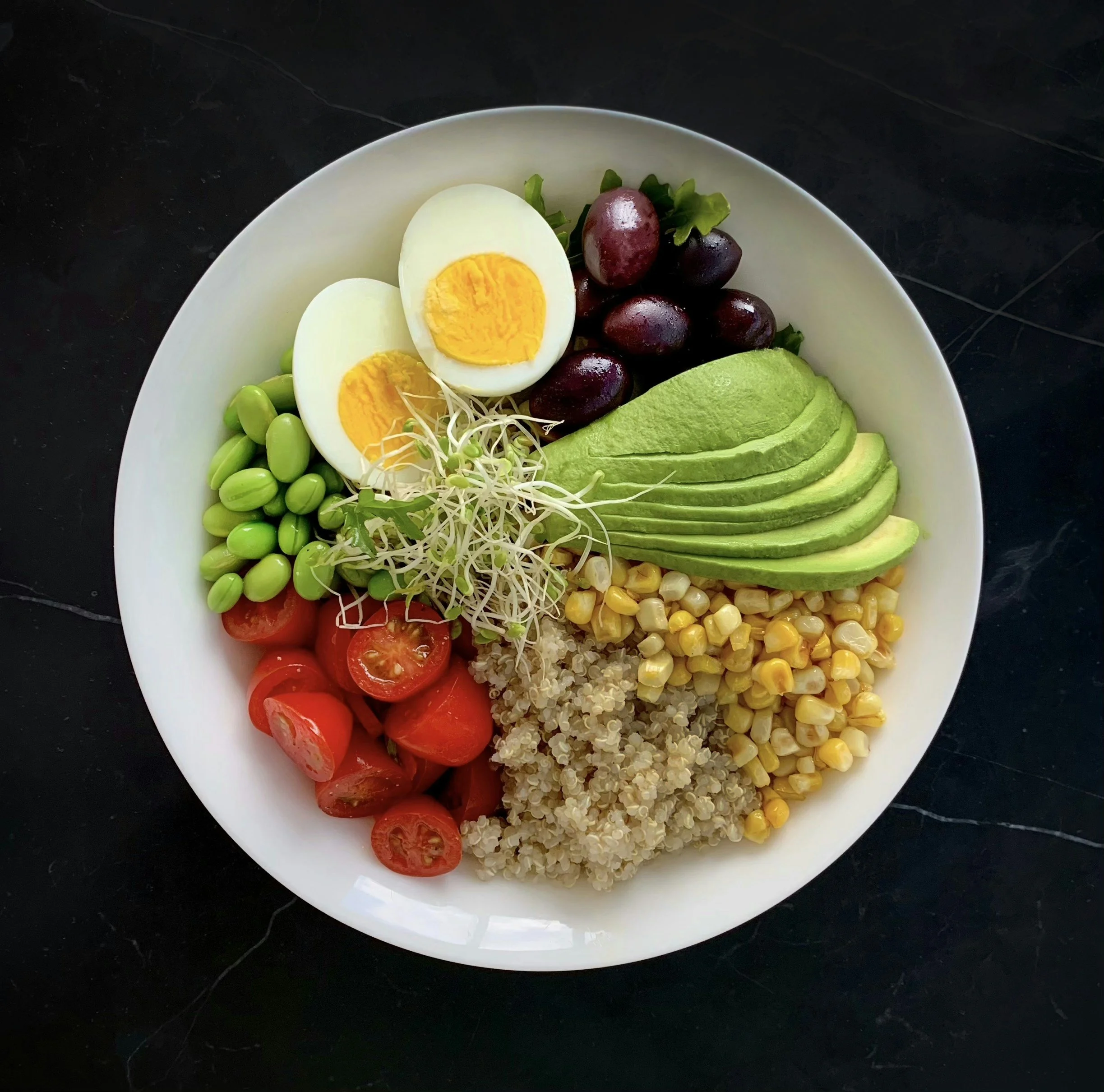
A white bowl filled with protein-rich foods including a boiled egg, avocado, edamame, cherry tomatoes, corn and quinoa - perfect fuel for an ADHD brain
This blog is written for adults with ADHD - though if you're a parent reading this, the general principles apply just as well to your whole family.
When I was young, my mother used to cook us eggs for breakfast every single morning. Scrambled, fried, boiled – she’d switch it up so it never got boring. It felt like a proper start to the day, and I never questioned it.
It was only at sleepovers with friends – waking up to sugary cereal or nothing at all – that I felt somehow cheated. Not ungrateful, just… off. Like a car trying to start without fuel.
I now know exactly what was happening. My mother was unwittingly giving me the best possible ADHD support before anyone had the language for it. She was, without knowing it, following the advice that neuroscientists would spend decades catching up with.
You might remember the old campaign: ‘Go to work on an egg.’ It turns out it was ADHD nutritional advice before ADHD was even a diagnosis for adults.
The adequately sciencey bit
Here’s the simple version of why protein matters so much for our brains.
Protein is made up of amino acids, and amino acids are the building blocks of neurotransmitters – the chemical messengers that keep our brains ticking. Dopamine, which ADHD brains are already short of, is built from protein. So, when we skip breakfast or grab something sugary, we’re not just staying hungry – we’re actually under-fuelling the very system that helps us focus, motivate ourselves, and regulate our mood.
Protein supports dopamine production, helps stabilise blood sugar, and may even help ADHD medication work more effectively. As for how much protein you need with ADHD - the honest answer is that the quantity matters less than the timing and consistency. Most adults need around 50-70g a day, but for an ADHD brain the key is spreading that throughout the day rather than loading it all into one meal. A protein-rich breakfast, a grab-and-go midday option, and something sustaining in the evening will serve you far better than a perfect macro count.
It’s not about eating perfectly. It’s about giving your brain the best possible chance on any given day.
Throughout this blog I've included AI prompts you can use straight away. If you've never tried asking an AI assistant for help with something practical like this, you're in for a treat. Just copy the prompt, personalise the bits in brackets, and paste it into Claude or your favourite AI assistant. It takes about thirty seconds and the results are genuinely useful.
Protein Hack 1: The Two-Mouthful Morning
If the word “breakfast” makes you want to go back to bed, you’re not alone. Many people with ADHD genuinely can’t face food first thing – and yet skipping breakfast means our brain is running on empty at exactly the moment we need it most.
Here’s what I suggest to my clients: don’t try to overhaul your mornings. Just run a tiny experiment on yourself. A one-rat study, if you like.
Grab two mouthfuls of something protein-based before you leave the house. That’s it. Notice how you feel by 10am. Just one week.
Not sure what to grab? This is where AI comes in. Try this prompt:
“I have ADHD and can’t face eating breakfast. I am [vegan/vegetarian/dairy-free/nut-free – delete as appropriate]. Please suggest five two-mouthful protein options that require no preparation, no cooking and no thinking first thing in the morning.”
Here’s what came back when I tried it:
• A hard-boiled egg – boil a batch the night before, grab one from the fridge
• A small handful of mixed nuts – just open the bag
• A Babybel cheese – peel and eat, zero effort
• A spoonful of peanut butter – straight from the jar, no judgement
• A couple of slices of wafer-thin ham – open packet, done
Your one-rat study starts tomorrow morning! Report back to yourself in a week.
Protein Hack 2: The Midday Rescue
Here’s something that happens to almost everyone with ADHD, medicated or not. You surface from a deep hyperfocus tunnel sometime around 2pm, blinking slightly, and realise you haven’t eaten since breakfast. Or possibly yesterday.
By this point the idea of preparing anything is completely overwhelming. You need something now – and if the cupboard is bare, you’ll grab whatever is nearest, cheapest and most immediately satisfying. Which is rarely the thing your brain actually needs.
The solution isn’t willpower. It’s shopping.
Not inspired, creative, Pinterest-worthy shopping. Just a simple, repeatable list of affordable grab-and-go proteins that live in your kitchen and require absolutely nothing from you except opening a packet.
Protein doesn’t have to be expensive. Some of the best ADHD-friendly options are also the most budget-friendly:
• Eggs
• Tinned tuna, sardines or mackerel
• Tinned beans or lentils
• Peanut butter
• Own-brand natural yoghurt
• Cottage cheese
• Frozen edamame
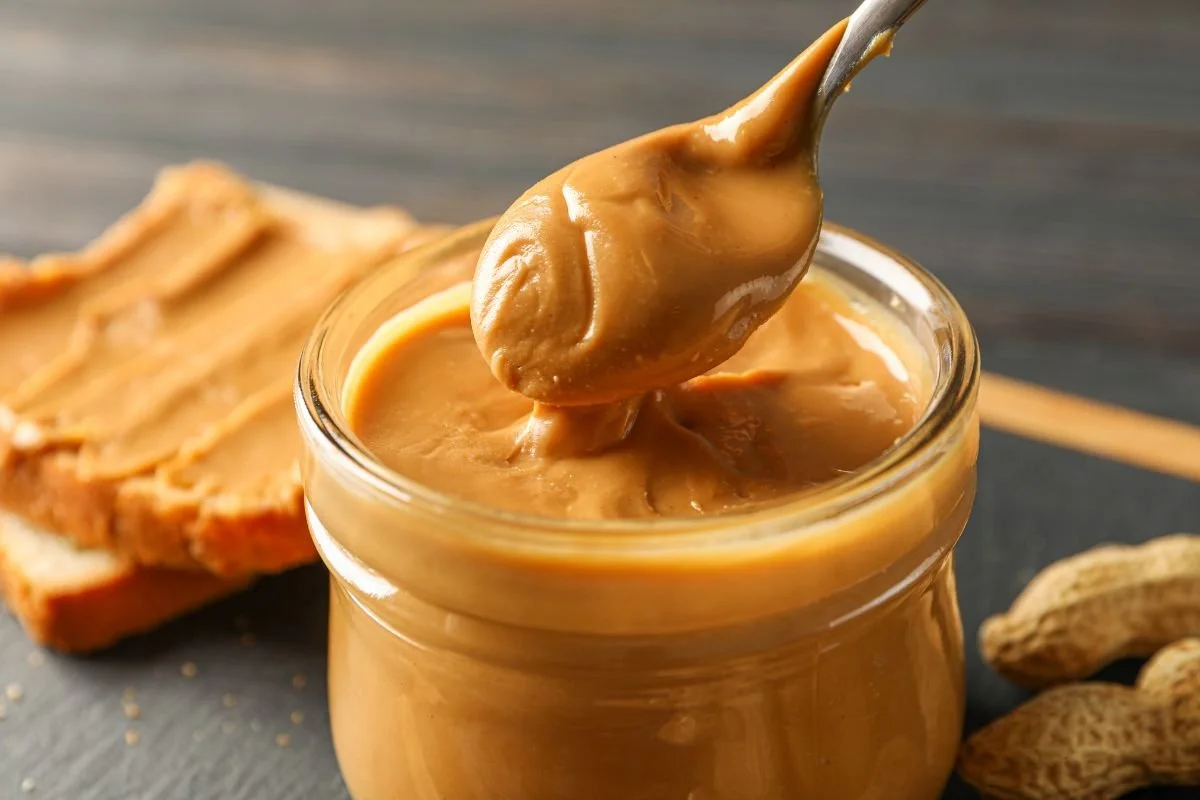
A jar of peanut butter with a spoon - a perfect grab-and-go protein snack for ADHD brains
The trick is getting them into your house before you need them. And this is where AI genuinely helps – not by telling you what you should eat, but by building you a personalised, affordable shopping list before you set foot in the supermarket.
Try this prompt:
“I have ADHD and struggle to plan ahead for protein during the day. I have roughly £[X] a week for snacks and lunches. I am [dietary preferences/intolerances]. Please suggest a simple weekly protein plan with a short shopping list – everything should require minimal preparation and be easy to grab when I’ve forgotten to eat.”
Getting that list onto your phone before your next shopping trip takes about two minutes. Future you will be very grateful.
A word about protein powders: they're everywhere and heavily marketed, but for most people real food works just as well and costs considerably less. If a shake helps you hit your protein on a chaotic day, fine - but don't feel pressured into an expensive supplement habit when a handful of nuts does the same job.
Protein Hack 3: The Evening Rescue
By evening, your ADHD brain has been working extraordinarily hard all day just to keep up. Executive function, focus, emotional regulation – all of it takes far more energy for an ADHD brain than a neurotypical one. So, when resolve weakens and the biscuit tin starts calling, that’s not a character flaw. That’s a depleted brain seeking the anticipatory dopamine wave that even the thought of a biscuit can trigger.
The solution isn’t to promise yourself you won’t go to the biscuit tin. We both know how that ends.
The solution is to make sure something better is within exactly the same arm’s reach.
There’s a lovely irony here. The diet most celebrated by nutritionists today looks remarkably like the simple, unprocessed, protein-and-vegetable-heavy eating of the post-rationing era. No protein bars, no complicated macros – just real food, easily available. We somehow made it all much more complicated than it needs to be.
So, stock your evening snack shelf deliberately – before you’re hungry, before you’re depleted, before the biscuits start whispering. Try this prompt:
“I have ADHD and my willpower collapses in the evening. I am [dietary preferences/intolerances] and my budget is around £[X] a week. Please suggest five comforting, satisfying evening snacks that contain protein and are as easy to grab as a biscuit.”
The biscuit tin isn’t going anywhere. But with the right things on the same shelf, you might just reach for something else first.
Protein Hack 4: Outsmarting the Midnight Fridge Raid
If we haven’t eaten sufficiently during the day (see Protein Hacks 1, 2 and 3!) your brain is running on empty at exactly the moment it needs fuel for a good night’s sleep.
So it goes looking in the fridge.
The solution is to catch that rebound window deliberately and have something protein-rich ready and waiting. Not a meal. Just something small and sustaining.
Why protein specifically? Because it helps stabilise blood sugar overnight, supports the neurotransmitter replenishment that happens during sleep, and is far less likely to have your dentist raising an eyebrow at your next appointment.
Try this prompt:
“I am [dietary preferences/intolerances]. Please suggest five small protein-rich evening snacks that will help stabilise my blood sugar overnight and support good sleep.”
Here’s what came back when I tried it:
• A small bowl of Greek yoghurt – high protein, contains tryptophan which supports sleep, and the calcium helps too
• A couple of oatcakes with peanut butter – the combination of protein and slow-release carbs is ideal for overnight blood sugar stability
• A small handful of almonds – protein, magnesium and healthy fats, all of which support sleep
• A boiled egg with a rice cake – light but genuinely satisfying, won’t feel heavy before bed
• A small piece of cheese with a couple of crackers – the classic reason your grandmother said cheese before bed helps you sleep actually has some truth to it – tryptophan again!
A banana works beautifully here too – tryptophan and magnesium together, nature’s gentle sleep support.
Your brain will thank you. And there’s a reasonable chance you’ll sleep better too.
None of this needs to be complicated. Four simple hacks, a shopping list on your phone, and an AI prompt or two standing between you and a brain that’s better fuelled, better rested, and considerably happier.
Ready to explore the bigger picture?
Ready to explore the bigger picture?
Understanding why your brain works the way it does – and what it actually needs – is one of the most quietly transformative parts of a late ADHD diagnosis. Protein timing is just one piece of a much larger, more fascinating jigsaw.
If you’re finding the pieces and wondering how they all fit together, I’d love to talk. A Taster Session is a gentle, unhurried conversation about where you are, what’s becoming clearer, and what might be possible when you finally understand the brain you’ve always had.
References & Further Rabbit Holes:
British Nutrition Foundation on protein
ADHD, genes and neurotransmitters: https://www.ncbi.nlm.nih.gov/pmc/articles/PMC2626918/#:~:text=It%20has%20been%20proposed%20that%20ADHD%20is%20a%20polygenic%20disorder,see%20Comings%20et%20al%202000).
Synthesising dopamine: https://mentalhealthdaily.com/2015/04/07/foods-that-increase-dopamine-think-tyrosine/
