
Why Does the Time Go?
Why does our time seem to evaporate? For many ADHDers, it disappears because of a combination of procrastination, hyperfocus, and difficulty transitioning. Here's how to navigate it.
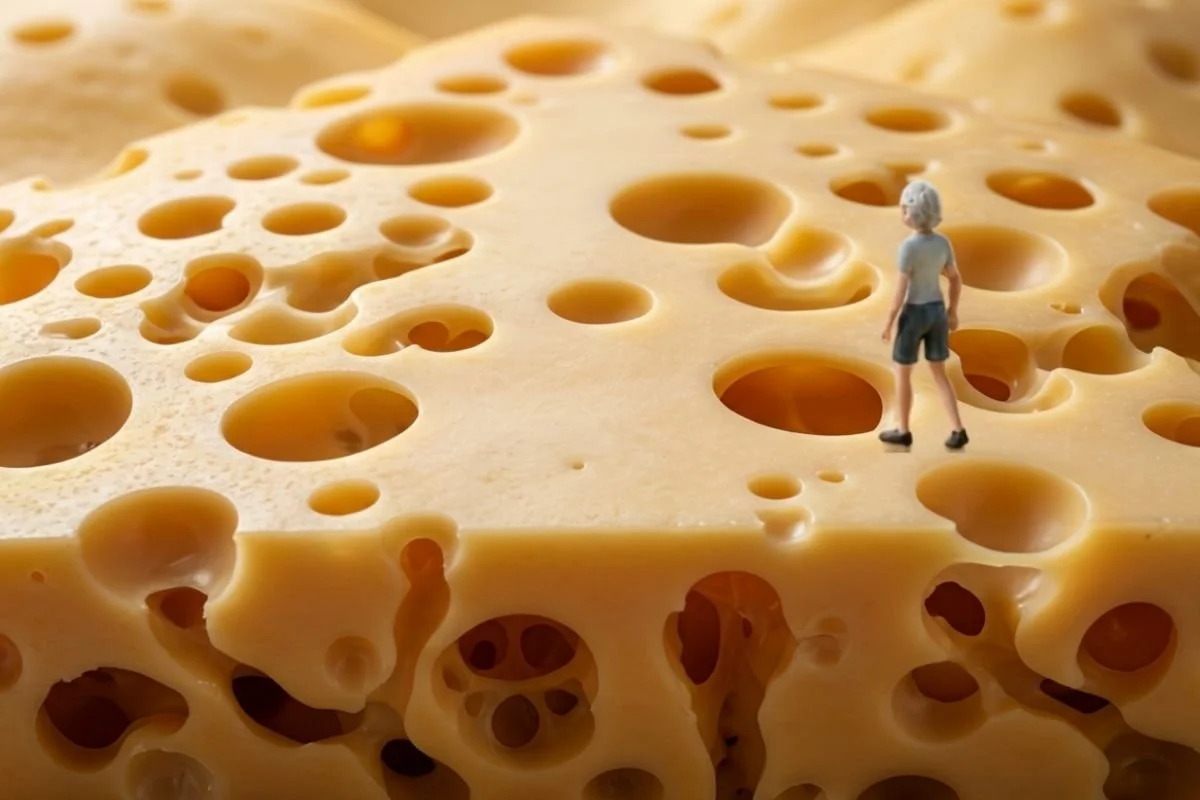
Is the way you picture your time a smooth ride, or is it more like traversing a giant piece of Emmental, a landscape with holes in it, some small enough to trip you up, and some so big you could fall right in?
I face my Emmental landscape every morning.
Let me explain the ADHD terrain ahead of me. Firstly, I’m constantly at the mercy of procrastination. I will always gravitate towards the ‘easy route’ and put off the effortful tasks. That’s just the way it is. However, when I do become engaged in something, either intentionally or unintentionally I become deeply immersed. I therefore won’t be monitoring the passage of time. Crucially, I also won’t be recognising that transitioning from one activity to another is a task in itself.
If that all sounds familiar, let's look at what's actually happening, and what might help.
Three things, not one
All three trip hazards come back to the same root: an ADHD brain's relationship with handling distraction.
Procrastination. This one often influences the other two. Sometimes procrastination will have prevented us from clearly identifying our tasks and goals, and sometimes it makes transition seem impossible, when we know we need to switch tasks but just can't quite make ourself. Despite how it feels, this won’t be down to laziness. It is more often a response to a task that feels overwhelming, unclear, or simply boring.
Immersion. We sit down to do one thing, and our brain locks on. This is hyperfocus, and it is not a discipline issue, it is a dopamine one. Once something has our attention, our brain protects that state fiercely, because it feels good and because ADHD brains often struggle to generate that level of engagement on demand. The trouble is, the outside world, and the next task, simply does not exist while we're in it.
Transitioning. Even once we notice we need to stop, moving from one state to another is genuinely hard. Our brain has built momentum in one direction, and changing direction takes a kind of executive effort that does not come easily. This is why “just stop and do the next thing” rarely works. It is not one step, it is several: noticing, disengaging, letting go, and getting going again.
On their own, each of these is manageable. But they rarely stay separate. Immersion runs into a difficult transition, which runs straight into procrastination, and what started as three trip-hazards easily becomes one large paralysing crevasse.
What helps
Visualise your endpoint.
Before I even start, I picture a signpost on the horizon, mine reads 'Lovely Job.' It’s my way of patting myself on the back. It doesn't matter what yours says, what matters is having something concrete waiting at the far edge, so the crossing has a point before you've taken the first step.
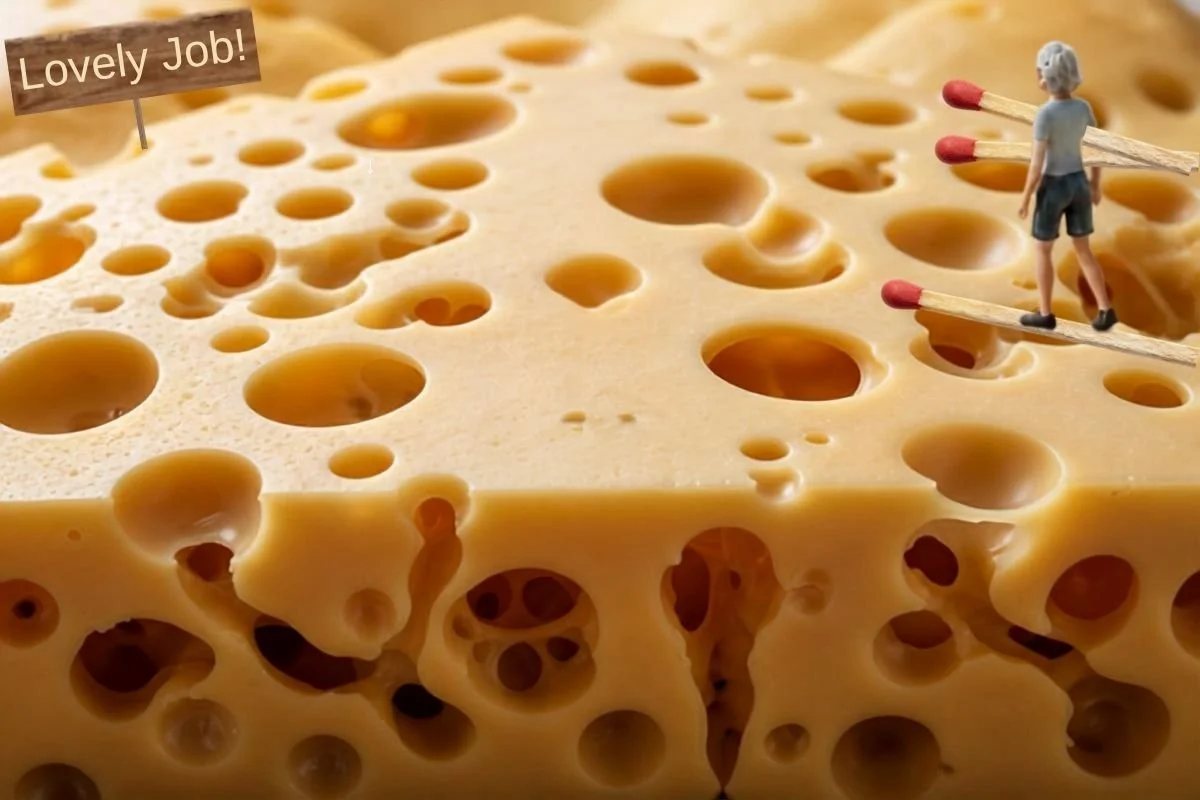
Notice which of the three trip hazards which caught you out. Build awareness. Ask yourself, am I stuck in something, stuck between things, or stuck avoiding something? The answers call for different responses, and knowing which one you're dealing with is vital information.
Build in mini-checkpoints for each element. For immersion, set a cheery timer for the point you mean to stop, rather than a vague “sometime later”. For transitions, make them real. Devise something physical to mark the shift, like standing up, moving to a different room, even singing yourself a little ‘time to shift’ song. For procrastination, leave a visual cue where the task you’re avoiding can be picked up again, say the file left open, or the item left out, so it's easier to see how far you’d got. None of these rely on you noticing in the moment. You have externalised that need.
Be kind about it. You might still misjudge your Emmental landscape. It is genuinely harder for your brain than it is for some others, and you are gathering information about how you work. All self-awareness is genuinely helpful.
The point
None of this makes the terrain flat. But by naming the three things we're navigating, rather than one vague fog called time blindness, we have something to work with.
Keep an eye on that sign on the horizon! It's the whole reason this crossing is worth the effort.
If picturing that "Lovely Job" sign helped, you might enjoy a piece I wrote about treating your future self as your best friend, and the small "tomorrow gifts" that make the crossing easier before you've even started. Read "ADHD Procrastination: A Kinder Way to Help Your Future Me"
